

Tuscany doesn’t care how you look in photos. It cares whether you can climb 463 steps in the wrong shoes, survive a sudden shower, or get past a church door. Here’s what to pack, season by season from a guide who watches the same packing mistakes play out every single year.
3 Rules That Apply in Every Season
Before you get to the calendar, these 3 things are true in January and in August.
- Wear comfortable shoes.
Your shoes decide your trip. Tuscan towns are built on stone, slopes and centuries of bad ideas about pavement. Wear comfortable, broken-in shoes with rubber soles (leather on wet stone is a slide, not a step). New shoes bought for the trip mean a blister by day 2. - Dress in layers, not in outfits.
Mornings and evenings are often much cooler than midday, especially in the hills. A light layer you can remove beats a heavy one you can’t. - Cover shoulders and knees for churches.
Many churches enforce it at the door. A light scarf or shawl solves it in 2 seconds and makes every outfit look more intentional. Carry one, every season.
Bonus for every season: a small day bag with zip pockets, a refillable water bottle and sun protection covers you year-round.
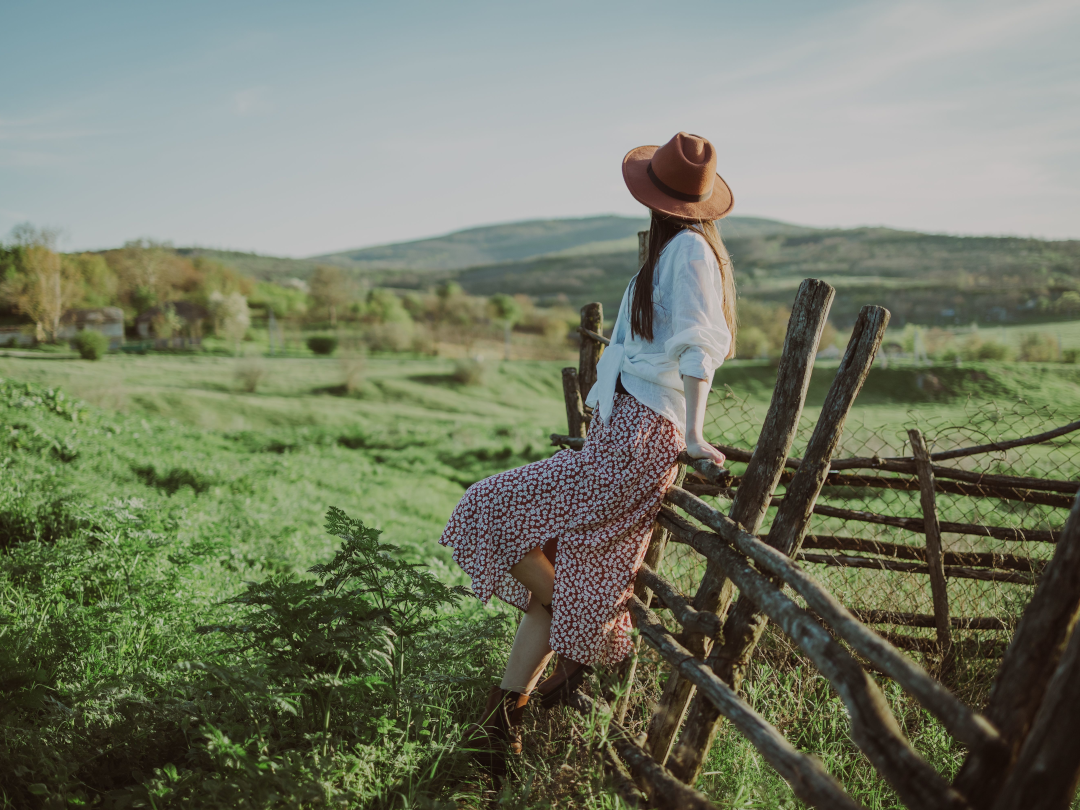
Spring in Tuscany (March–May):
Sunshine With a Sense of Humor
Spring is green, beautiful and completely unpredictable. One morning feels like summer, the next one forgot to warn you about the rain. Layers are everything.
What to wear:
- Light waterproof jacket or packable rain layer.
- Long-sleeve tops and a light sweater or cardigan.
- Comfortable trousers, jeans or a long skirt.
- Water-resistant walking shoes or sturdy trainers with good grip.
- A scarf which doubles as church cover-up and cool evening warmth.
🎒 Day bag essentials: compact umbrella, sunglasses, sunscreen. Spring sun is sneakier than it looks.
👉🏻 Good to know: the countryside is at its most photogenic now, but paths get muddy after rain. If your tour includes vineyards or country walks, leave the white shoes at home.
Summer in Tuscany (June–August):
Survive the Heat With Style
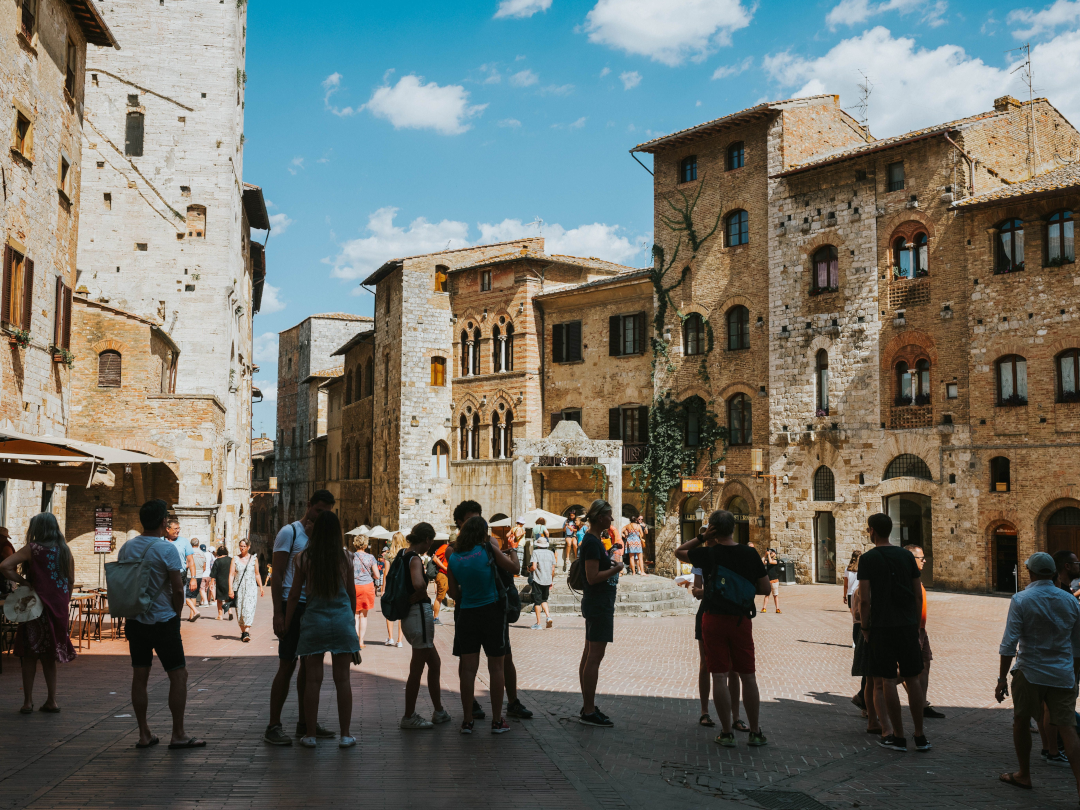
Summer is hot, bright and best experienced before 11 AM and after 5 PM. Midday is for lunch in the shade. The locals know it, so should you.
What to wear:
- Breathable fabrics: linen, light cotton, loose weaves (skip heavy synthetics).
- Light-colored, loose clothing that covers shoulders in direct sun.
- Wide-brimmed hat and good sunglasses (not optional).
- Comfortable sandals with a proper sole, or breathable walking shoes (flip-flops are for the pool, not cobblestones).
- Light scarf or shawl for churches.
- One light layer for air-conditioned restaurants and cool evenings in the hills.
🎒 Day bag essentials: refillable water bottle, high-factor sunscreen, a small fan if you are heat-sensitive and tissues. Tuscan water fountains are real, and so are the queues for them.
👉🏻 Good to know: a guide who builds the day around the sun isn’t being lazy, just smart.
Autumn in Tuscany (September–November):
the Sweet Spot, With a Raincoat
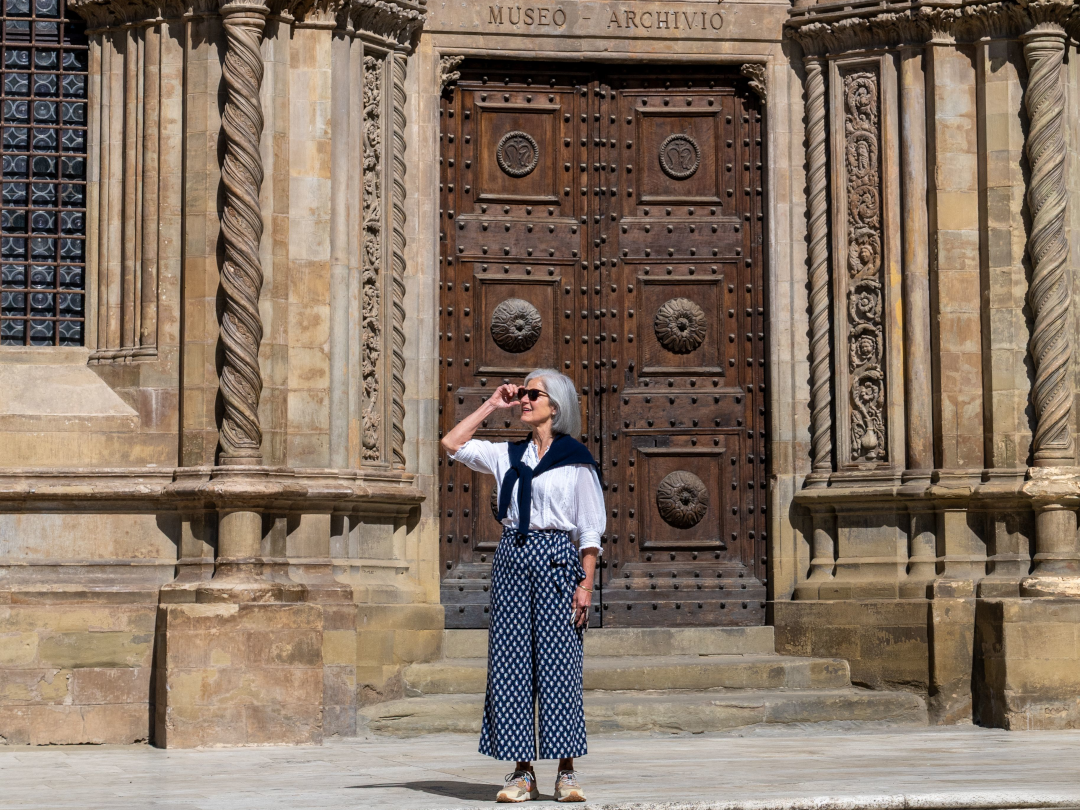
Autumn is my favourite season: harvest, truffles, chestnuts, golden vineyards and far fewer crowds. September is often still warm; October and November bring cooler days and more rain. Pack for 2 seasons in 1 suitcase.
What to wear:
- Light waterproof jacket plus a warmer mid-layer (sweater or fleece).
- Long trousers or jeans; a long skirt with tights for dinners.
- Closed, water-resistant shoes with real grip (wet leaves on stone are a hidden hazard).
- A scarf (church rule, plus warmth).
- In September: keep one summery top for the sunny days.
🎒 Day bag essentials: compact umbrella, thin hat or beanie for cooler mornings, small plastic bag for wet shoes.
👉🏻 Good to know: food festivals and harvest events make this the best season for tastings. A cozy evening in a country trattoria needs a cardigan, not a ball gown.
Winter in Tuscany (December–February):
Cold, Quiet and Underrated
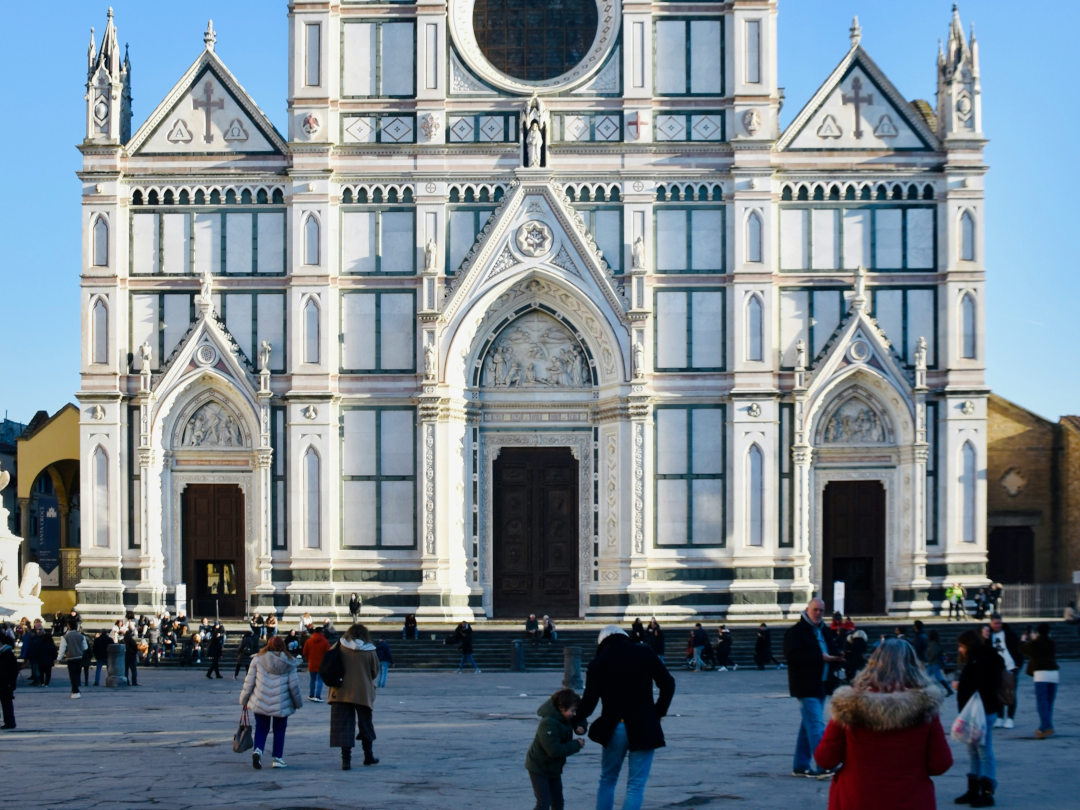
Winter is the secret season: empty museums, hearty food and fireplaces. It’s cold and damp (especially in the hills and early mornings) and some areas can see snow. Dress warm. Keep it practical.
What to wear:
- Warm, windproof coat (down or insulated jacket works well).
- Thermal base layers, wool or fleece sweater, warm socks.
- Scarf, gloves and a warm hat.
- Waterproof boots with good grip: cold stone floors in churches feel colder than the weather outside.
- Trousers you can layer, not a single heavy outfit.
🎒 Day bag essentials: compact umbrella, hand warmers if you feel the cold, a small thermos for walks.
👉🏻 Good to know: daylight is short, so plan visits early. Evenings are for long dinners, so bring something warm that also looks good at the table.
What to Leave at Home
I have seen all of these in the wild. Some of them more than once.
- Brand-new shoes: see rule 1.
- High heels: cobblestones eat heels for breakfast and the ankles attached to them.
- Beachwear in town: swimsuits and bare chests belong at the sea, not in a restaurant or a church.
- White sneakers you love: Tuscan dust and mud have no respect for them.
- Heavy luggage: many towns have stairs, narrow lanes and no lift in sight; pack what you can carry up a flight of stairs.
- Outfits that need constant adjusting: if you spend the day pulling at your clothes, you’re not looking at the view
🧳 Still not sure what to pack?
The right outfit depends on where you’re going, not just the month. A day in the hills is not a day in the city. A winery visit is not a cathedral tour.
When you book with me, I tell you exactly what to wear for your specific itinerary, your dates, and the weather forecast I check before you do.