
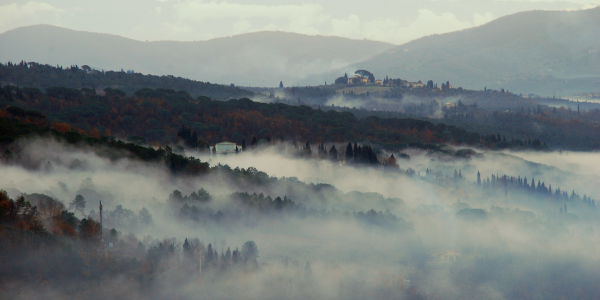
Tuscany is famous for hills, wine and Renaissance art. It’s less famous for its body count that would embarrass a Scandinavian crime novelist.
This guide covers 5 of the region’s darkest legends with a fact-check on each one, so you know what’s real, what’s tradition, and what somebody’s great-great-grandmother invented for dramatic effect.
How to Read This Guide: The Fact-Check Meter
Every legend below gets a rating:
- 👻 Pure legend: no paperwork, no problem, great story.
- 🦴 Some bones: real people, real places, dramatic bits are tradition.
- 📜 Paper trail: dates, names and documents hold up.
1. Pia de’ Tolomei: the Woman Who Got One Speech
The legend
Pia belongs to the Tolomei of Siena, one of the oldest banking families in the city. She marries Nello dei Pannocchieschi, a powerful lord with a castle in the Maremma. Then it gets ugly.
Depending on who’s telling it, Nello wants her gone because of a new lover, an accusation of infidelity, or no heir. The ending is always the same: Pia dies falling from a window, a tower, or the ramparts. The specific architecture varies by village.
The Dante connection
Dante meets her in Purgatorio, Canto V. She gets a handful of lines enough to say: please remember me when you’re back among the living. She never names her killer.
The ghost
Her spirit is said to linger at the Ponte della Pia, a Roman-era bridge near Rosia, on the old road from Siena to the Maremma, the road she crossed on her way into exile, and never left.
Where to experience it
Every August, the town of Gavorrano stages the Salto della Contessa: 2 costumed factions, flag-throwers, a horse race, and a woman “falling” from a window at the finale. Check the local calendar for the exact date.
Fact-Check Meter: 🦴
Dante, the Tolomei, the Pannocchieschi and the castle are all real. The murder? A story told by people who weren’t there, starting about 700 years ago.
2. Lucida Mansi: the Devil’s 30-Year Subscription
The legend
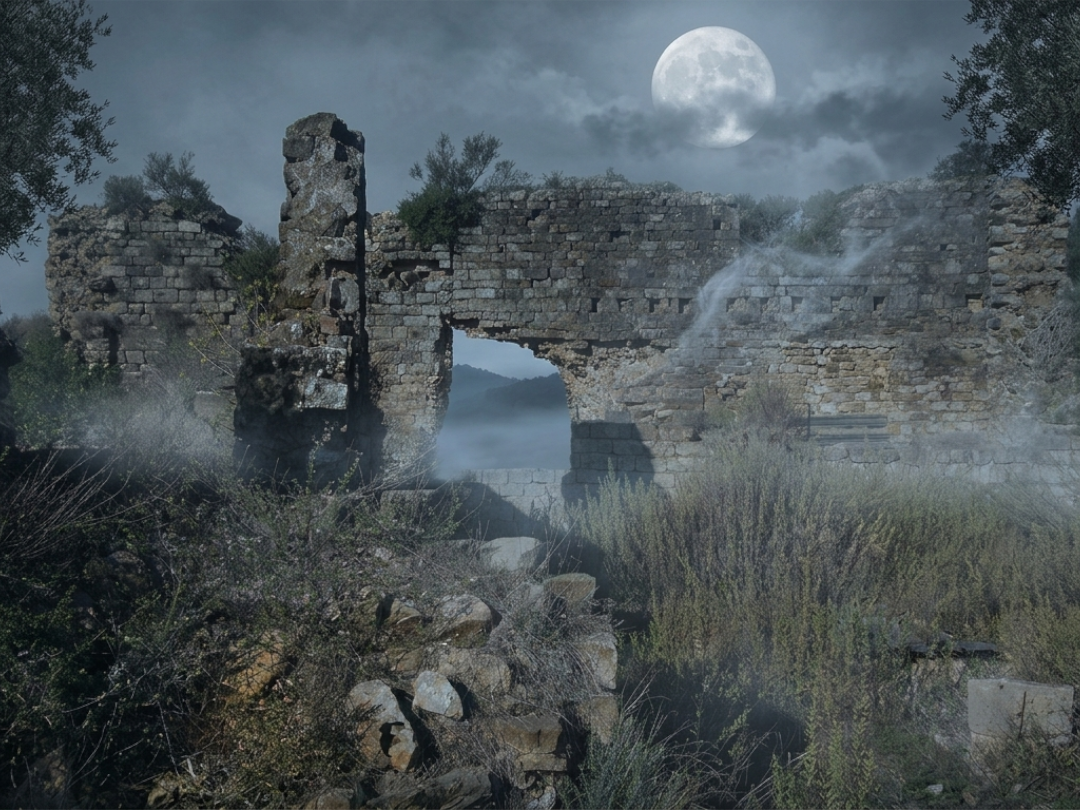
Lucca, 17th century. A beautiful, wealthy noblewoman married into the Mansi family (Lucca’s silk merchant elite). One morning Lucida finds a wrinkle. The devil appears in the shape of a handsome young man with an offer: 30 years of youth in exchange for her soul.
She accepts. Thirty years of parties, lovers and mirrors follow. Then comes the deadline and the legend splits into 3 versions:
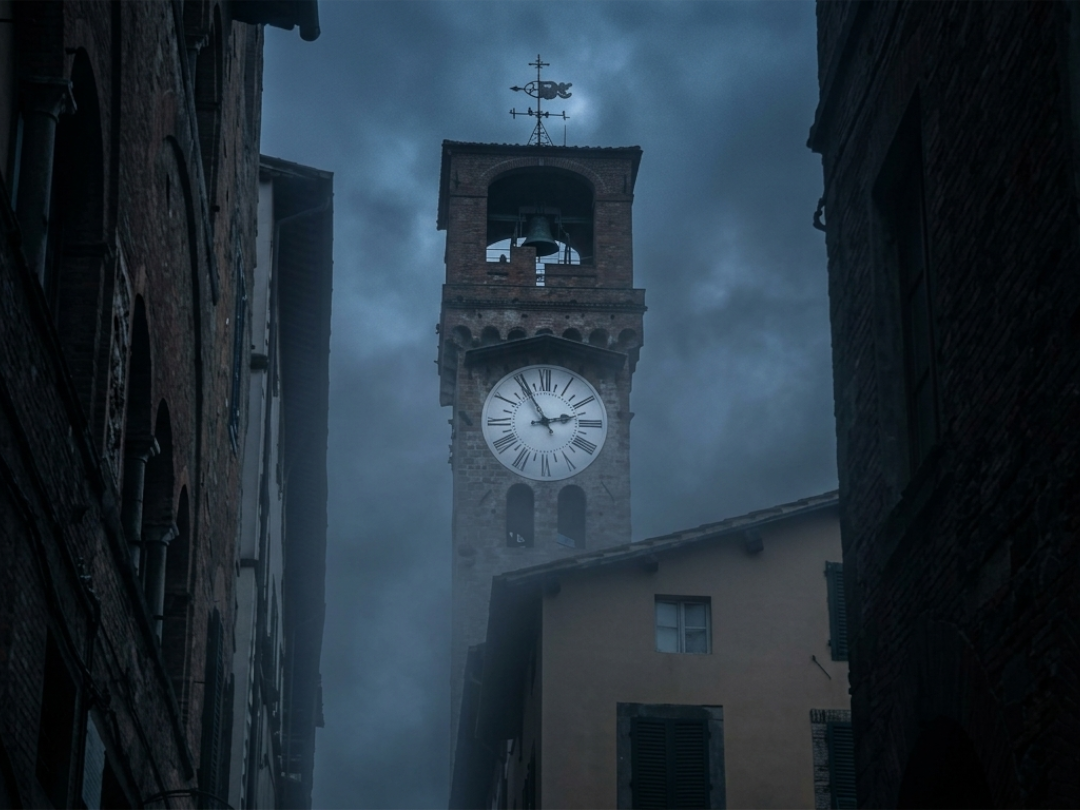
- The tower: she climbs the Torre delle Ore to stop the clock before it strikes. The devil catches her anyway.
- The carriage: she races along the city walls, the horses leap off and she drowns in the botanical garden pond.
- The bridge: the devil throws her into the Serchio from the Devil’s Bridge (see below).
Her face is said to appear in the pond’s dark water. A fiery coach tears around the walls on moonless nights, or full-moon nights, depending on who’s telling it. Conveniently, that means the ghost is on call all month.
Where to experience it
- Climb the Torre delle Ore (207 steps: the devil did not install a lift).
- Walk the city walls at dusk.
- Find the pond in the Orto Botanico (botanical garden).
- Add Villa Mansi in Segromigno if you have a car: Lucca’s own tourism office calls it one of the city’s most beloved legends.
Fact-Check Meter: 👻
The Mansi family, the silk fortune and the villa are real. A soul-selling Lucida is not. Historical records suggest her husband Gaspare outlived her and was buried beside her in the family chapel, a significant plot twist for a man the legend presents as very old and very absent.
3. The Devil’s Bridge: History’s Most Scammed Contractor
The legend
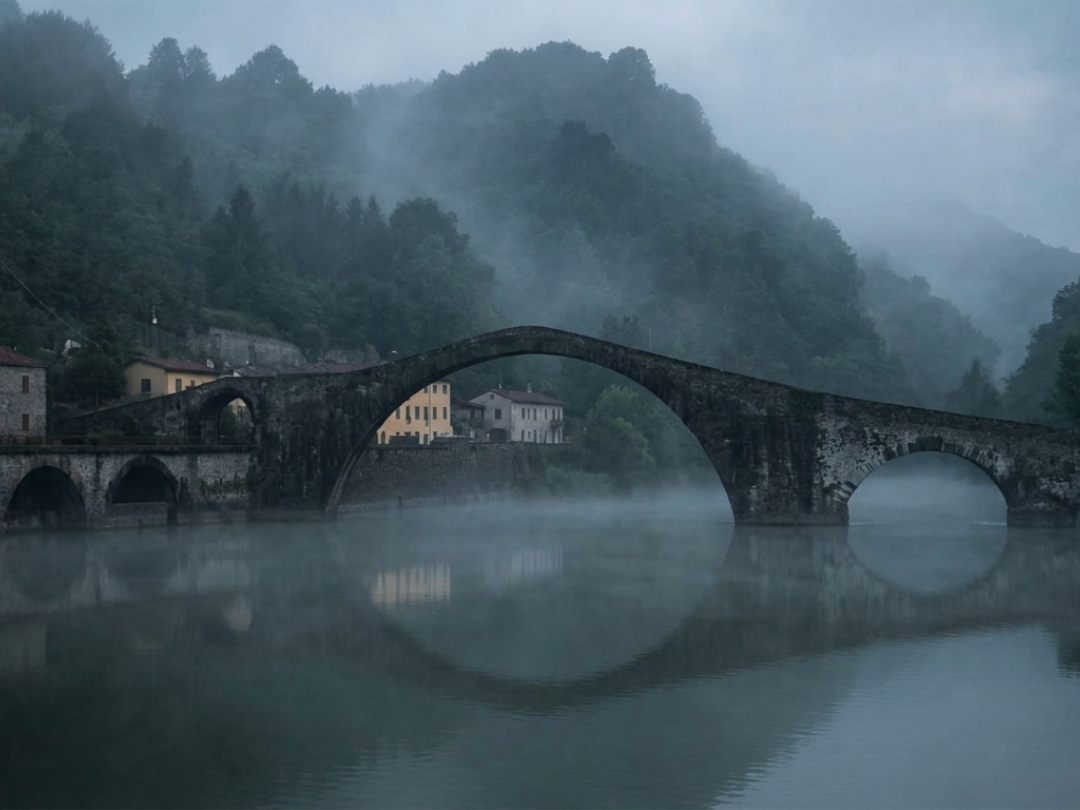
The Ponte della Maddalena at Borgo a Mozzano crosses the Serchio north of Lucca: a steep hump with arches of mismatched sizes that looks like no bridge you’ve ever seen.
The story: a master builder, losing his race against the river, makes a deal with the devil. The bridge gets built overnight. In exchange: the soul of the first creature to cross. The builder goes to the priest, who sends him back with a plan: the first to cross will be an animal. A dog, a pig, or a cat, depending on the village. The devil, outsmarted by livestock, throws himself into the river and is never seen again.
The same legend is told about dozens of “Devil’s Bridges” across Italy and Europe. At some point you have to wonder whether he’s just bad at reading contracts.
Where to experience it
Free access all year. A few steps from the center of Borgo a Mozzano, on the SS12 north of Lucca.
Fact-Check Meter: 📜 for the bridge, 👻 for the devil
The first structure dates to the era of Matilda of Canossa (11th century), reworked in the early 1300s under Castruccio Castracani. The name “Maddalena” only appears from the 1500s. In the early 1900s, a smaller arch was added to let the Lucca–Aulla railway through. The devil’s masterpiece got a railway extension, which is the most Italian punishment possible.
4. Florence: the City That Never Forgave Anyone
Florence’s stone doesn’t just hold art. It holds grudges. Here are 4 stories from the same square kilometer.
Baldaccio d’Anghiari, the mercenary who came back angry
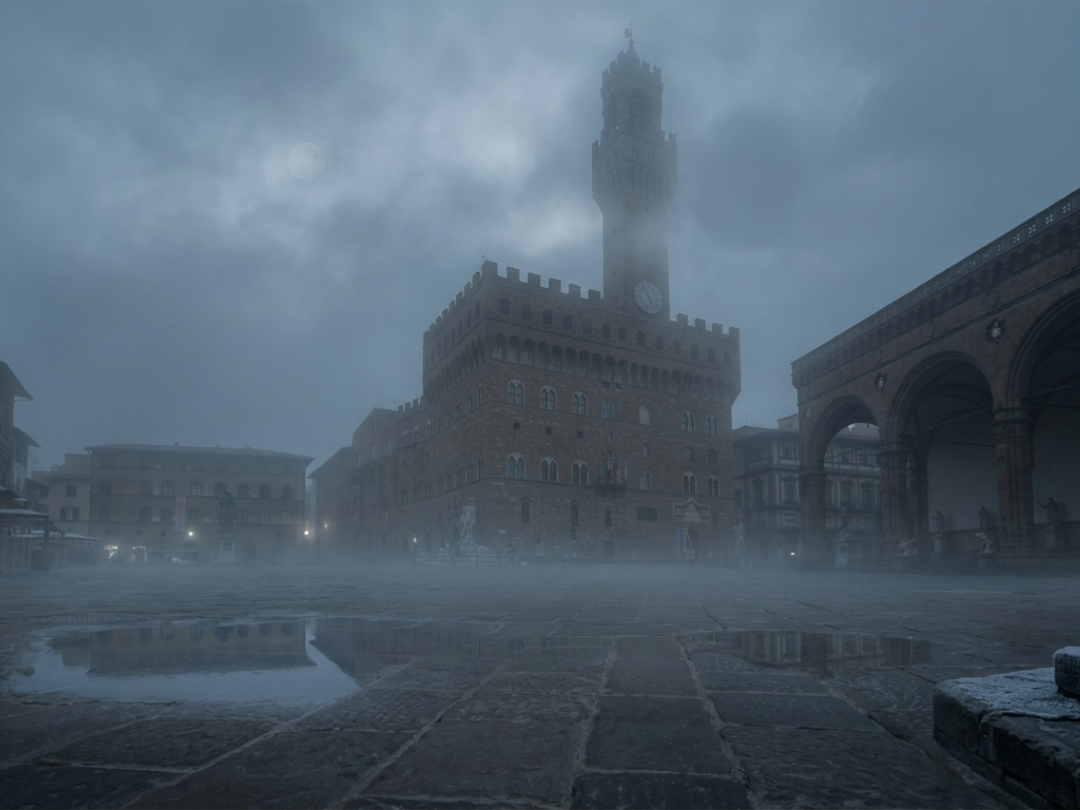
A mercenary captain, wrongly accused of treason, summoned to Palazzo Vecchio on 6 September 1441: shot from behind, thrown from a window, dragged into Piazza della Signoria and beheaded. His ghost reportedly returns every 6 September. A 2001 photo of an angry face (taken near the palazzo) was reportedly judged authentic after analysis. One version puts the photographers at Piazzale Michelangelo, others place them under the Palazzo Vecchio windows. Either the ghost works remotely, or the legend has been edited.
Fact-Check Meter: 📜 for the murder, 👻 for the ghost
The wall that remembers: Piazza della Signoria
- 26 April 1478: Pazzi conspirators hanged from Palazzo Vecchio windows, a message to everyone about challenging the Medici.
- 23 May 1498: Savonarola hanged and burned in the same piazza, ashes thrown into the Arno.
- The scratched profile: by the entrance, a small human face scratched into the wall. Legend credits it to Michelangelo, carved without looking.
Fact-Check Meter: 📜 for the executions, 👻 for Michelangelo
The window that never closes: Palazzo Budini-Gattai
Piazza della Santissima Annunziata, Palazzo Budini-Gattai: one upper-floor window on the far right is always open.
The story: a Grifoni son went to war, promised his bride he’d return soon, and never did. She waited at that window for decades. The day she died, someone closed it and the furniture shook, books flew and paintings fell until the shutters were reopened. Nobody has closed it since.
Fact-Check Meter: 👻
The head in the wall: Via de’ Cerretani
On the wall of Santa Maria Maggiore, a stone head juts out at eye level. Legend says a woman shouted at a condemned sorcerer not to give him water. In his fury, he turned her to stone. Her head has been stuck in the wall ever since.
Moral: don’t heckle sorcerers.
Fact-Check Meter: 👻
5. The Grand Duke, the Venetian, and the DNA
The best Tuscan story isn’t about a ghost. It’s about a hunting party.
The Setup
Bianca Cappello, a Venetian noblewoman, runs away to Florence with a clerk she married against her family’s will. In Florence she catches the eye of Francesco I de’ Medici, heir to the Grand Duchy, a man obsessed with exactly 2 things: alchemy and Bianca.
Her husband dies. Francesco’s wife, Joanna of Austria, dies (rumors fly). Francesco and Bianca marry in 1579 to the horror of the court. She becomes Grand Duchess and is never accepted by the aristocracy.
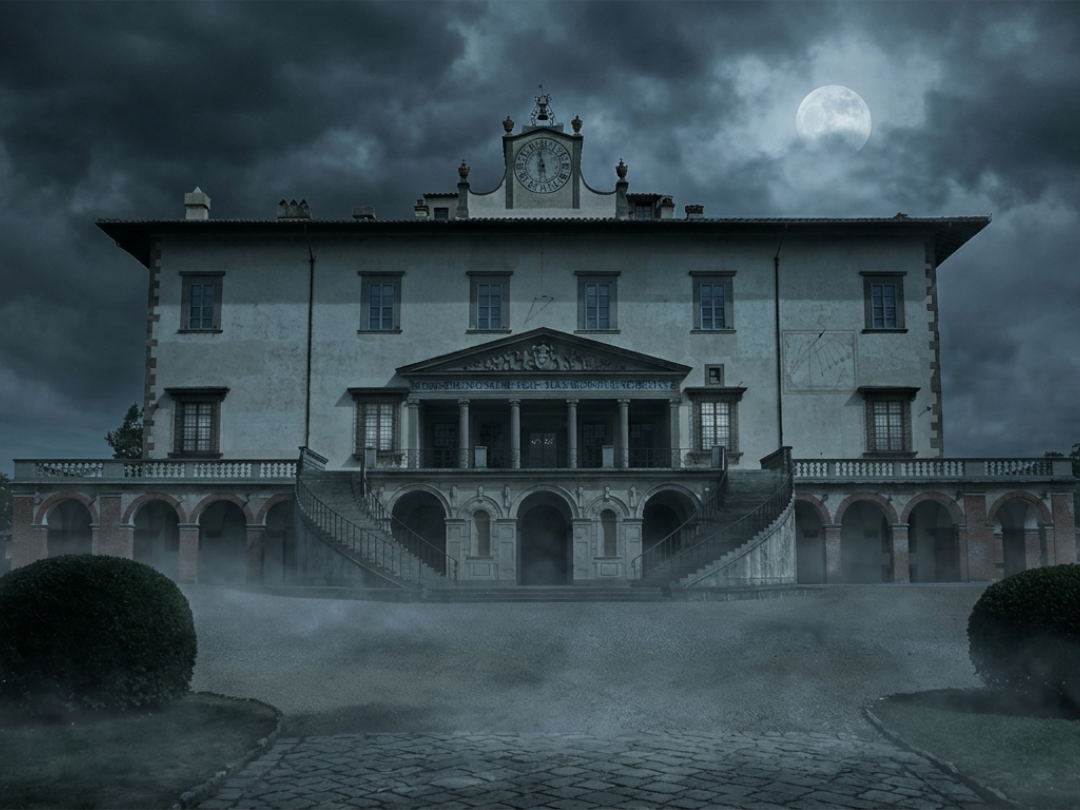
October 1587: the Medici villa at Poggio a Caiano
Francesco’s brother, Cardinal Ferdinando (who hates Bianca) is also present. Francesco dies on 19 October. Bianca follows around 11 hours later. Florence whispers poison. Everyone looks at Ferdinando, who promptly becomes Grand Duke. Bianca is denied a state funeral.
For 4 centuries the story is simple: the Medici murdered each other.
Then science gets involved
In June 2026, a study published in iScience by researchers from Yale and the University of Pisa found DNA from 2 malaria parasite species in Francesco’s ribs. The area around Poggio a Caiano was marshes and rice paddies: mosquito paradise.
But the case isn’t closed:
- Earlier lab work found arsenic traces in tissue linked to the couple’s organs.
- That finding is contested.
- One researcher says Francesco had malaria and was poisoned.
- An outside expert says the evidence is consistent with malaria but doesn’t rule out poison.
The verdict
Malaria is now very hard to deny. Murder is still impossible to rule out. Two things can be true at once, which is how Florence has operated since 1216.
Fact-Check Meter: 📜 with an asterisk
The legend of poison just got promoted from rumor to scientific dispute.
The Medici Villa at Poggio a Caiano is real, visitable, and considerably less scary in daylight.
Why These Stories Still Matter
A legend is what a place says when the archive goes quiet.
We know who the Tolomei were, but not what happened at Castel di Pietra. We know there was a Mansi, but not what she asked the devil for. Something happened in these buildings, the paper trail stops, and the storytellers walk in.
The best part: you can still stand in all of these places.
- Cross a bridge the devil allegedly built.
- Climb 207 steps up a clock tower to stop a bell.
- Look up at a window in Florence that, according to legend, no one has dared close for centuries.
🐈⬛ Want to hear these stories in the places where they happened? 🔮
My private walking tours of Florence and Lucca include the legends, the fact-checks, and the spots most visitors walk straight past.