
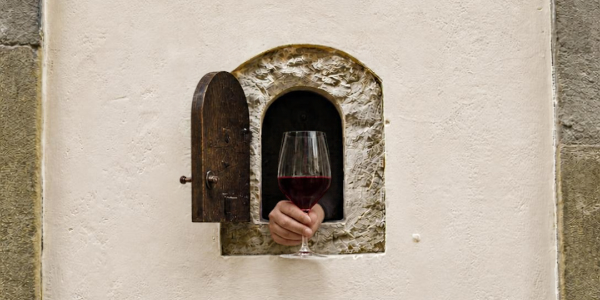
Florence has over 155 wine windows (buchette del vino) — tiny Renaissance hatches built into palazzo walls for selling wine directly to the street. Most are sealed. Some are fake. Here’s how to tell the difference, and which 5 are actually worth visiting.
What Wine Windows Actually Are
Buchette del vino — literally “wine holes” — are small hatches built into the walls of Florentine palazzi.
Noble families used them to sell surplus wine directly to the street, bypassing shops and avoiding taxes. No middleman. No markup. A direct line from the vineyard to your cup.
Under Florentine law, winegrowers could sell retail tax-free, which made wine more accessible to poorer families too. Florence was running a farm-to-wall operation four centuries before it was fashionable.
The plague connection is real too. In 1634, just after the plague, the scholar Francesco Rondinelli documented how these hatches helped prevent contagion during outbreaks. Florence invented contactless service, with better wine.
Real or Fake? How to Tell the Difference
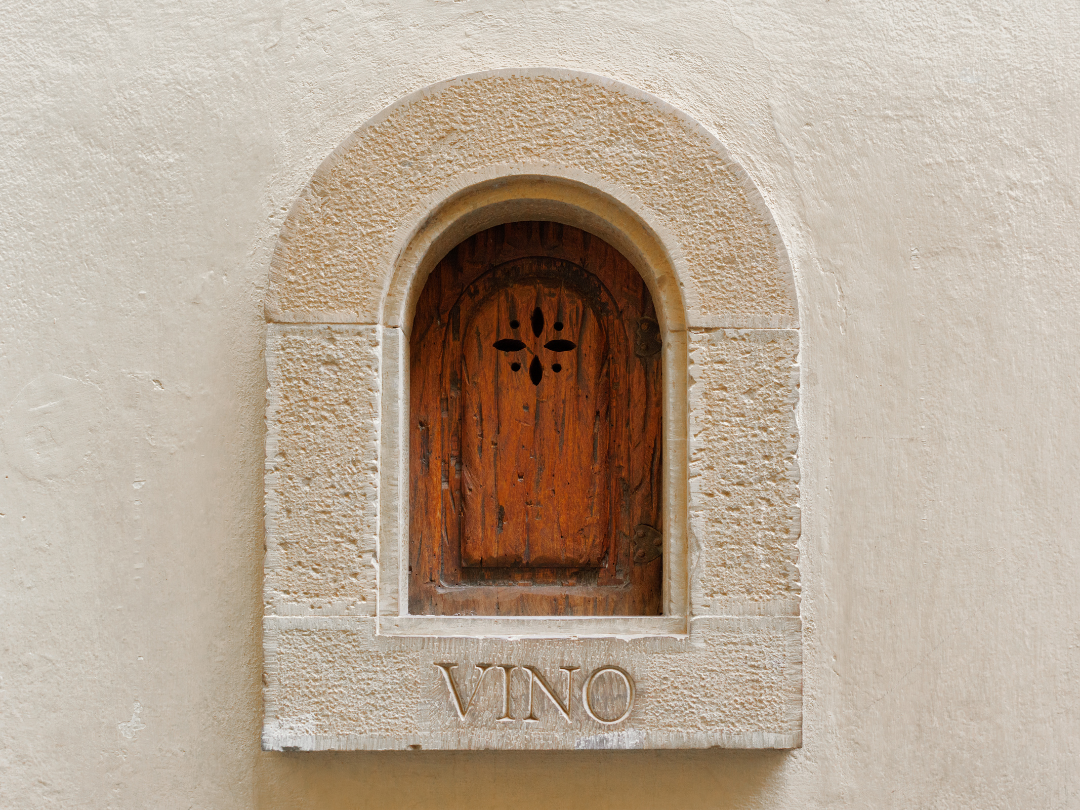
FThere are over 155 wine windows inside Florence’s city walls and 26 outside. Most are sealed. A handful are open. And some being marketed as “historic” were built last Tuesday.
Here’s how to tell the real ones apart:
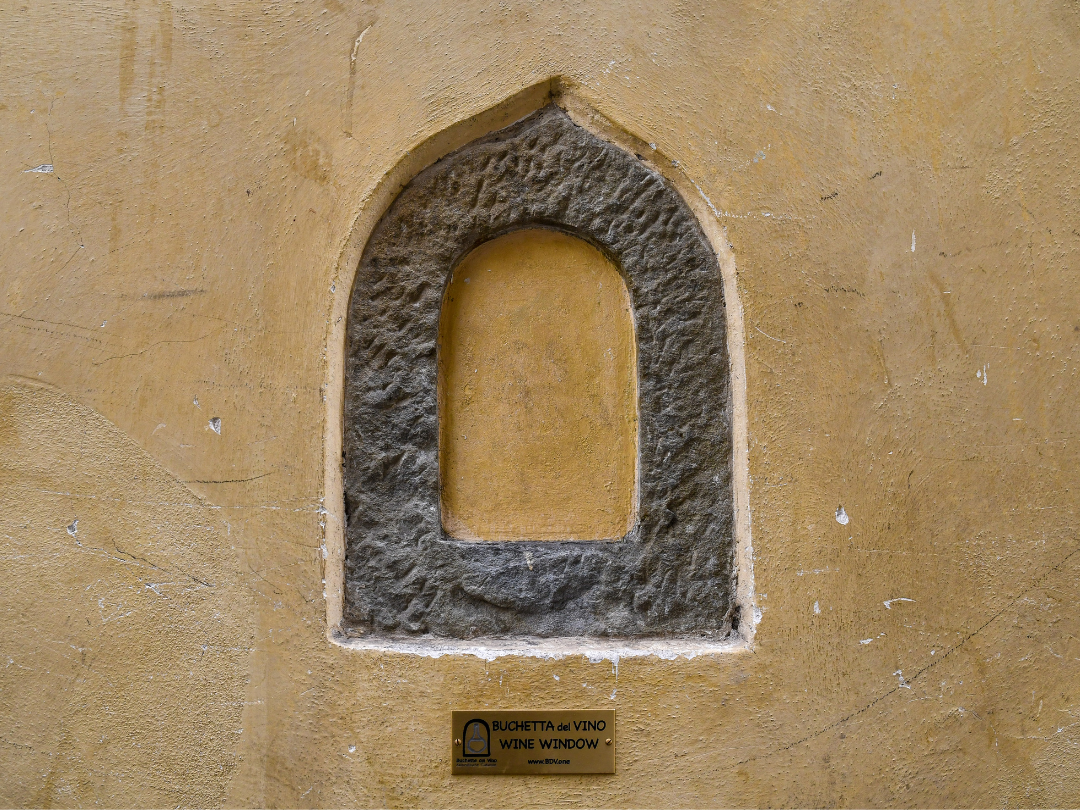
- Look for the official brass plaque: the association awards one to authenticated windows. No plaque on a “historic” window? Be skeptical.
- Check the stone and the frame: a real buchetta sits in a stone arch set into an old palazzo wall, with visible wear. Shiny new stone on a modern surface is a red flag.
- Cross-reference the census: the association has catalogued more than 300 windows across Florence and Tuscany. Not on the list? Worth asking why.
- Not every small hatch is a wine window: old Florentine buildings are full of small openings for deliveries, stables, and other purposes.
- Sealed doesn’t mean fake: many genuine windows are bricked up. They’re survivors, not frauds.
The 5 Wine Windows Worth Visiting
1. Babae — Via Santo Spirito 21R
The one that proves a revival can be done right.
The arched window sits in weathered stone, with a small plaque confirming its authenticity. They actually pour wine and well-made cocktails, depending on the hour.
One rule: don’t ask for a cappuccino. This is a wine window. Order something Tuscan, hand over the coins, and enjoy being part of a 400-year-old tradition. The bar down the street will be delighted to make your coffee.
2. Cantina de’ Pucci — Via de’ Pucci 4A
A window with genuine history, set into a Renaissance palazzo and still run by people who respect the building.
The stone frame, the location, the pedigree — it gives you the feeling of stepping into something real rather than something staged.
3. Osteria San Fiorenzo — Borgo dei Greci 1r
One of the best-known working windows in the historic center, and one of the most atmospheric.
It gives you the “I’m in a Renaissance film” feeling without the cliché, which is harder to find than it sounds in Florence.
4. Vivoli — Via dell’Isola delle Stinche 7r
The plot twist on this list.
Florence’s legendary gelateria reopened its historic window in May 2020, serving coffee, drinks, and gelato through it. Proof that these openings were always about trade and creativity, and that Florentines will sell you almost anything through a hole in the wall if you ask nicely.
5. Cicalone Osteria & Vinaino — Via delle Belle Donne 43r
The answer to anyone who wants a photo and an actual experience.
A real osteria with a real window, where people eat actual food and talk to actual humans. Known for Florentine humor, signs full of irony, and a well-chosen selection of Tuscan wines.
This is the one I’d send a friend to first.
Before You Go: 3 Rules from a Local Guide
The photo is fine. The ring light is not required. But while you’re there:
- Respect neighboring shops: someone else’s doorway is not your photo studio.
- Respect the locals: people live on these streets; a tripod and 3 friends blocking the lane is not a vibe, it’s an obstacle.
- Expect direct feedback: if a Florentine tells you loudly, and with gestures, that you’re in the way, that’s not rudeness. That’s a cultural exchange. Step aside, smile, and you’ll probably leave with a better story than your photo.
Treat the street like a guest, not a film set — and the wine window will reward you. Possibly with a better glass.
👉 Curious about what else Florence is hiding in plain sight?
Get in touch and I’ll build you an itinerary around the city’s most overlooked corners.