

There’s a sentence I hear constantly from travelers planning a Tuscany trip:
We’re thinking about doing a quick day trip to Lucca.
And every time, I think the same thing: that city deserves so much better than a quick stop.
Lucca is one of the few places in Tuscany that still feels surprisingly normal — in the best possible way. Elegant without trying too hard. Beautiful without performing for the camera every second. And while cities like Florence now navigate massive crowds year-round, Lucca still moves at a human pace. That’s not a limitation. That’s exactly why people fall in love with it.
The problem with “famous” Tuscany
Let’s be honest for a moment.
Most travelers arrive in Tuscany imagining slow mornings, quiet piazzas, and charming streets where they can actually wander. Then they land in Florence in July — and find themselves in what feels like a Renaissance-themed obstacle course.
I love Florence. I work there, guide there, and genuinely believe it’s one of the most extraordinary cities in the world. But Florence is intense. It demands energy from you.
Lucca doesn’t. Lucca welcomes you differently. You don’t arrive feeling the pressure to “see everything.” You arrive — and you immediately slow down. That’s a rare thing now.
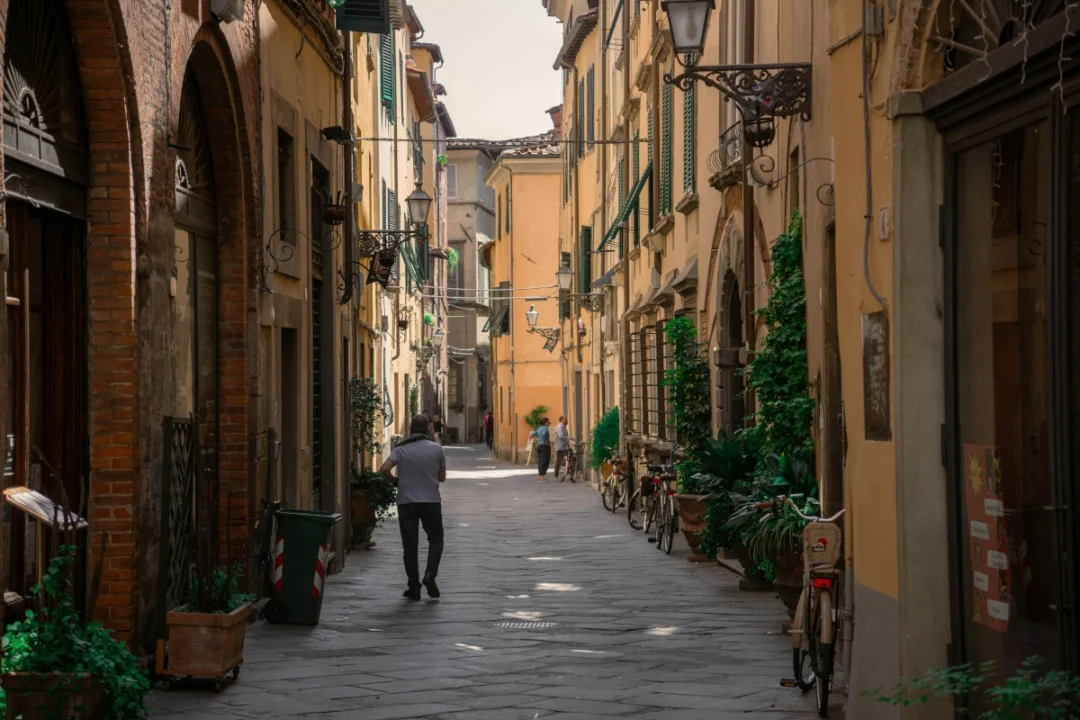
A city that still feels lived in
The first thing most people notice in Lucca isn’t a monument. It’s the atmosphere.
People cycling calmly through the streets. Elderly locals chatting outside cafés. Children playing in piazzas that haven’t turned into selfie stages yet. The city still belongs to the people who live there — and travelers are simply invited into it.
That changes everything. When a city loses its daily life, it starts feeling like a backdrop instead of a place. Lucca, somehow, has avoided that fate. Walking through it feels less like visiting a destination and more like stepping into someone else’s perfectly ordinary — and perfectly pleasant — afternoon.
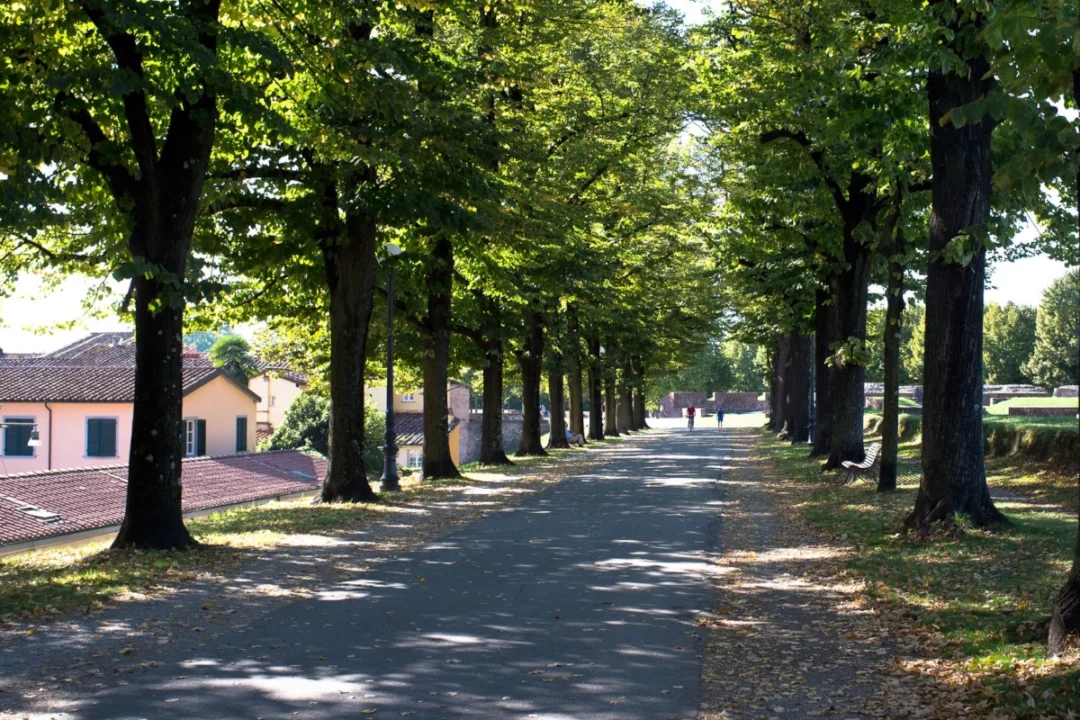
The city walls – not just “Something to see”
Everyone talks about the walls of Lucca — and yes, they’re beautiful. But what makes them genuinely special isn’t just the history. It’s how the city uses them today.
The Renaissance walls surrounding Lucca aren’t aggressive or monumental in the way first-time visitors sometimes expect. Instead, they’ve become part of everyday life. People jog there, walk their dogs, ride bikes and stop to chat.
You don’t visit the walls. You live them.
Walking along the top in the late afternoon — trees creating shade, the city unfolding quietly below — is one of the most quietly satisfying experiences in all of Tuscany. Not dramatic. Not overwhelming. Just deeply, genuinely pleasant. Every time I’m up there, I think about how lucky Lucca’s residents are to have this as part of their daily routine.
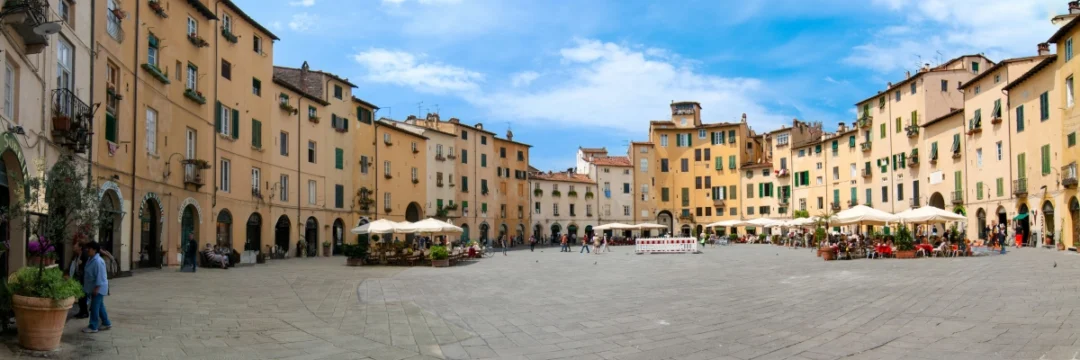
Piazza dell’Anfiteatro:
Touristy — but still worth it
Let’s talk about the famous spot everyone photographs: Piazza dell’Anfiteatro.
Is it touristy? Yes.
Is it still worth seeing? Absolutely — because unlike many Instagram-famous places, this piazza still has genuine personality. The oval shape, built over the footprint of an ancient Roman amphitheater, creates a space that feels strangely intimate despite the visitors.
The advice I always give: don’t rush in, take a photo, and leave. Go early in the morning or later in the evening, when the atmosphere softens. Sit down. Watch the light change. Notice how people move through space.
Lucca rewards people who slow down. That, really, is the secret of the whole city.
For travelers who are tired of performing their vacation
Here’s something nobody talks about enough: travel has become exhausting.
Too many reservations, too many schedules, too much pressure to optimize every hour. Lucca works precisely because it allows you to stop performing your trip.
You don’t need a strict itinerary.
Some of the best moments happen accidentally:
- getting lost in a quiet side street;
- hearing church bells you weren’t expecting;
- discovering a small wine bar with no online hype;
- walking into an artisan shop simply because something caught your eye.
This is also why I often suggest Lucca to travelers who tell me: “We want Tuscany, but we don’t want chaos.” If that’s you, Lucca might be exactly what you’re looking for.
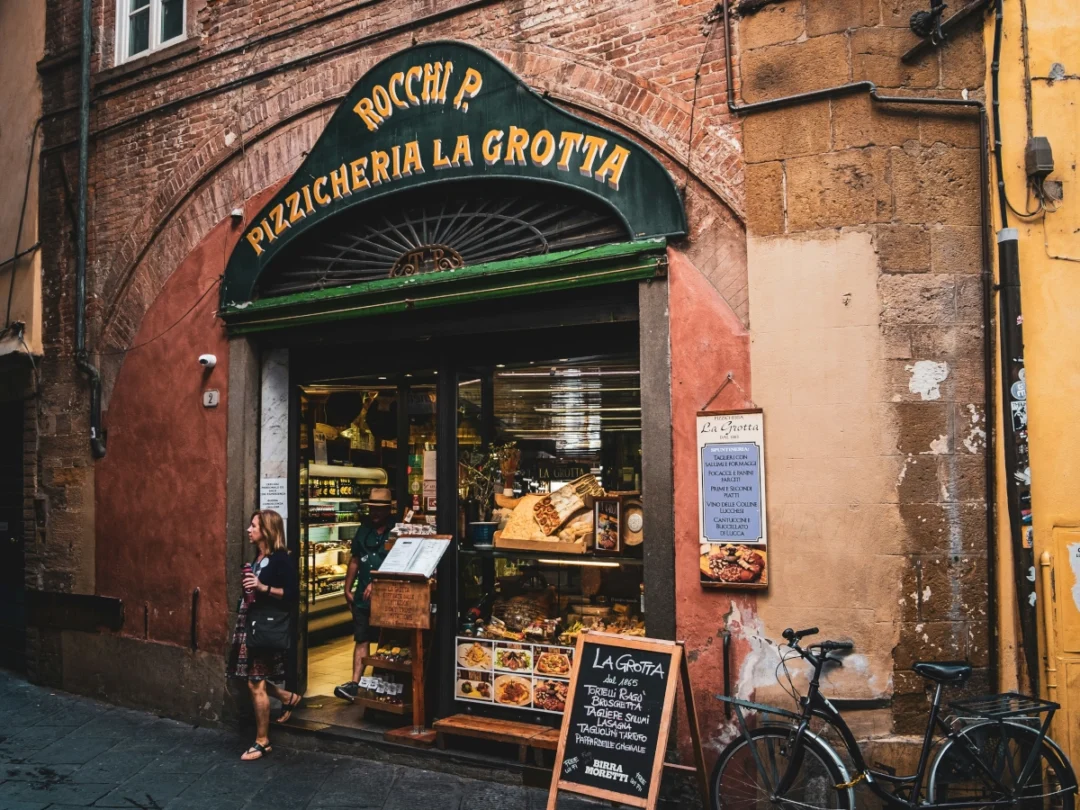
The food scene nobody talks about enough
Lucca also does something else very well: food without attitude.
Florence is wonderful for eating — but Florence can sometimes feel very aware of being Florence. Lucca feels more relaxed. Small trattorias, family-run places, bakeries, wine bars that don’t need a sign screaming “authentic Tuscan experience” to actually be one.
Simple dishes. Seasonal ingredients. No performance. That balance between quality and simplicity is becoming increasingly rare in highly touristic destinations — and Lucca still has it.
One of the best bases in Tuscany
This is something travelers often realize too late: Lucca is strategically excellent.
From here, you’re well-positioned to reach Pisa, the Tuscan countryside, the coast, and smaller villages that most visitors miss entirely — while still returning somewhere calm at the end of the day. That combination is genuinely valuable, especially if you’re spending more than a few days in Tuscany.
Staying overnight changes the experience completely. The city after the day-trippers leave is a different place — quieter, softer, more itself.
So… Is Lucca better than Florence?
No. And that’s the wrong question.
Florence is extraordinary because it overwhelms you — art, history, architecture, ambition, all hitting at once. Lucca does something entirely different. It gives you space.
And depending on the kind of traveler you are — or the kind of trip you need — that space can become the most memorable part of your whole journey.
People often leave Florence amazed. People tend to leave Lucca rested. Both are worth something. They just offer different things.
A few things First-timers should know
Before you go, a quick reality check:
- Lucca is quieter than Florence — but it’s not undiscovered. Summer still gets busy.
- The city is very walkable; comfortable shoes matter more than most people expect.
- Staying overnight changes everything. Don’t just pass through.
And most importantly: don’t treat it as a quick checkbox between Florence and Cinque Terre. That’s the biggest mistake travelers make — and the surest way to miss the point entirely.
The best way to experience Lucca
Here’s something slightly controversial: Lucca is not a city that rewards over-planning.
There are important things to see — churches, towers, historical sites. But if you schedule every hour, you risk missing the entire point. The best Lucca experiences happen through rhythm, not checklists.
That’s also how I approach my guided tours there. Not a rush through monuments collecting facts — but a way of understanding why this city feels different, and why so many visitors end up saying the same thing:
“I wish we’d stayed longer.”
Final thought:
Why being underrated is actually a gift
In a world where destinations are increasingly shaped around tourism, Lucca still feels surprisingly intact. Not perfect. Not frozen in time. Not hidden. Just authentic in a way that’s genuinely becoming harder to find.
And maybe that’s exactly why people connect with it so deeply.
The best places aren’t always the ones shouting for your attention. Sometimes, they’re the ones quietly waiting for you to notice them.
👉 Want to experience Lucca beyond the typical day trip?
A guided tour changes the way you see the city — slower pace, better stories, a local perspective that no guidebook can replicate.